
Buying a house at auction can sound like an opportunity to purchase a home for less than you might pay through a traditional listing. But what if you don't have enough cash to cover the entire purchase price?
Buying auction homes in Southern Maryland without paying all cash is sometimes possible. The key is understanding which auctions allow financing, how much money you need upfront, and whether your lender can meet the auction's requirements.
For buyers in St. Mary's County, Calvert County, and Charles County, knowing how Maryland foreclosure auctions work can help prevent expensive mistakes.
Let's look at the financing options, potential risks, and practical steps to consider before placing a bid.
Can You Really Buy a House at Auction Without Cash?
The short answer is yes, in certain situations. However, there's an important difference between buying a house without paying the entire purchase price in cash and buying one with no money available at all.
Many foreclosure auctions require successful bidders to provide a deposit, often through certified funds or another approved payment method. The amount and deadline depend on the specific auction.
Even if you arrange financing for the remaining purchase price, you may still need money for:
- An auction deposit
- Closing costs and applicable transfer taxes
- Property inspections or evaluations
- Legal and title-related expenses
- Repairs and maintenance
- Unexpected expenses after purchase
Some auction terms may require cash or certified funds and may not provide a financing contingency.
The most important rule is to arrange your funding before bidding, not after winning.
If you have little or no savings, a traditional home purchase with an eligible low-down-payment financing program may be a more realistic starting point.
How Real Estate Auctions Work in Southern Maryland
Not every property advertised as an auction home is being sold through the same process.
Understanding the differences is especially important in Maryland.
Foreclosure auctions
A foreclosure auction generally occurs when a mortgage lender pursues the sale of a property after the borrower defaults on the loan.
In Maryland, foreclosure actions are handled through the Circuit Court system.
Properties may be advertised through legal notices, and the auction terms identify important requirements such as the deposit, payment conditions, and responsibilities of the winning bidder.
According to the Maryland Courts foreclosure guidance, foreclosure notices provide auction details and contact information for the party conducting the sale.
Maryland Courts
Winning the auction does not mean you immediately receive ownership.
Maryland foreclosure sales are subject to court ratification. Legal title is conveyed after the applicable purchase conditions are satisfied and the deed is delivered.
Tax lien sales are different
This is one of the most important distinctions for anyone researching Maryland auction properties.
At a Maryland tax sale, the winning bidder generally purchases a tax lien certificate rather than the house itself.
The existing property owner retains ownership and has redemption rights under Maryland law.
The Maryland State Tax Sale Ombudsman explains how tax lien certificates work and why purchasing one does not immediately transfer property ownership.
dat.maryland.gov
If your goal is to purchase a home to live in, don't confuse tax lien investing with buying a foreclosure property.
Bank-owned properties and online auctions
When a lender takes ownership of a property after foreclosure, the home may later be marketed as a bank-owned property, sometimes called real estate owned or REO.
These homes may be offered through a traditional listing or an online auction platform.
Some bank-owned properties allow conventional mortgage financing, depending on the seller's terms and the home's condition.
For buyers who need a mortgage, this can be more manageable than bidding at a foreclosure sale requiring substantial funds upfront.
Ways to Finance an Auction Property Without Paying All Cash
There are several possible financing approaches, but none automatically guarantees that an auction purchase will qualify.
The right option depends on the property, your financial situation, the lender, and the auction contract.
1. Traditional mortgage financing
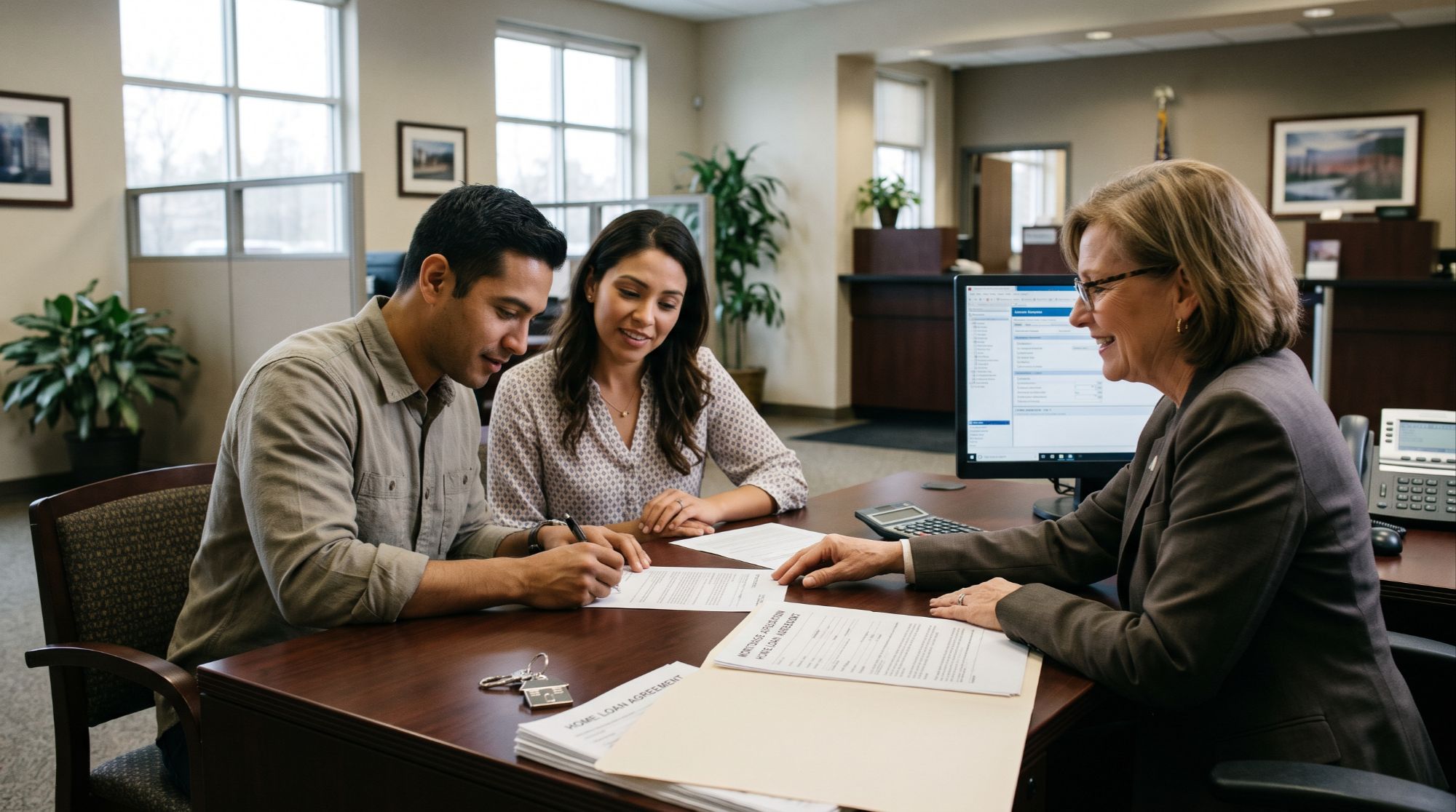
A conventional mortgage may be possible when the seller permits financing and the property meets the lender's requirements.
However, traditional mortgage financing generally involves underwriting, an appraisal, title review, and a closing process.
Those requirements can create problems when an auction has strict payment deadlines or does not allow inspection and financing contingencies.
Before bidding, ask your lender whether it can finance the specific property under the auction's written terms.
You can begin by reviewing mortgage pre-approval resources to understand how to prepare for a financed home purchase.
2. Hard money or private financing
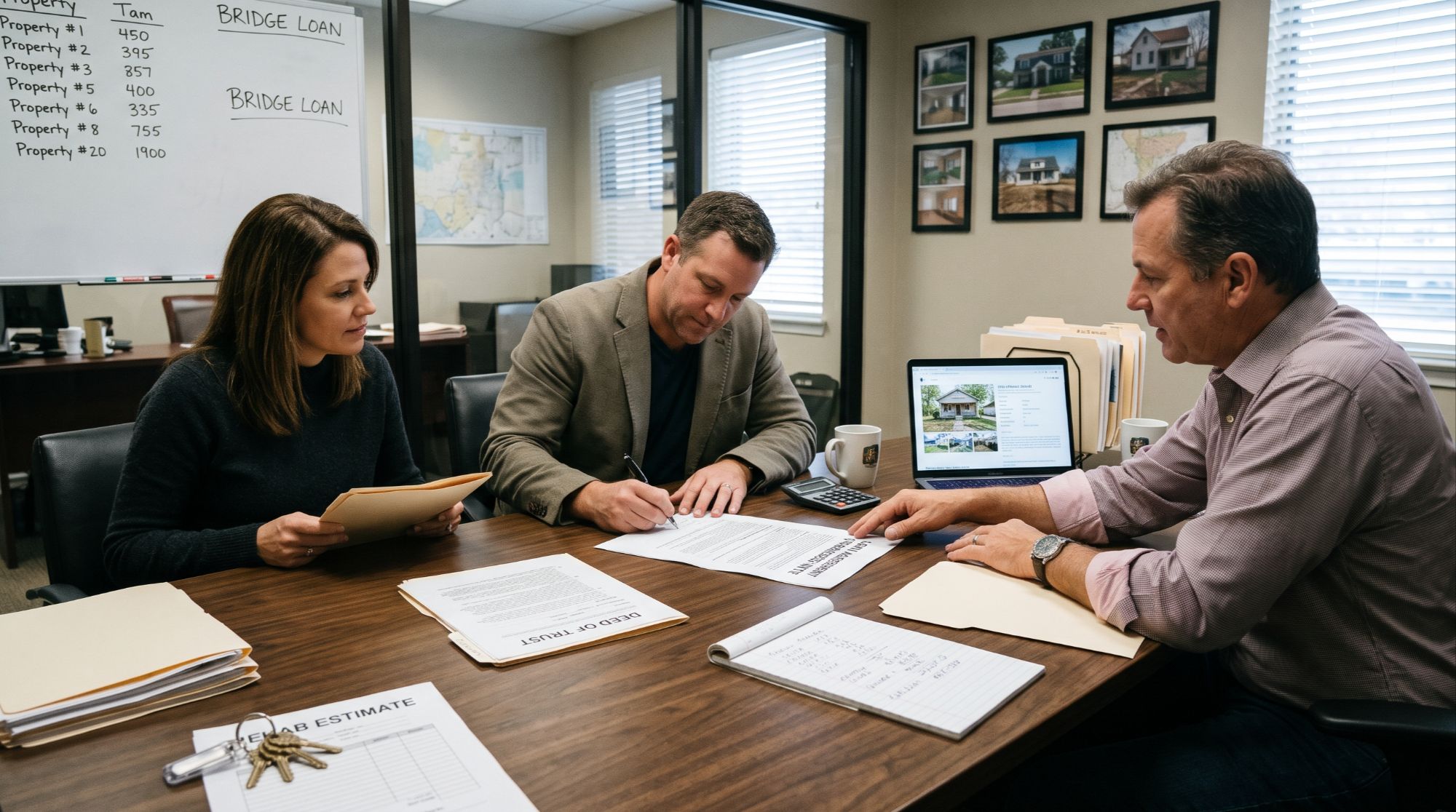
Some buyers consider short-term loans from private lenders or asset-based lenders.
These loans may be structured around the property's value and the borrower's financial qualifications.
Potential advantages include a funding process designed for investment or renovation transactions.
However, buyers should carefully evaluate:
- Interest rates and lender fees
- Required down payment or equity
- Repayment deadlines
- Property eligibility
- Personal guarantees
- The risk of needing to refinance or sell before the loan matures
Hard money financing is not necessarily a no-money-down option. It can also be substantially more expensive than traditional mortgage financing.
A short-term loan should only be considered when the buyer understands how it will be repaid.
3. Home equity loans or lines of credit

Buyers who already own property may be able to use available equity to help fund another purchase.
A home equity loan or home equity line of credit, commonly called a HELOC, may provide access to funds that can be used toward an auction purchase, subject to lender rules.
This strategy has significant risks.
Borrowing against an existing home puts that property at risk if the borrower cannot repay the debt.
Buyers should also consider whether the funds will be available before the auction's deposit and settlement deadlines.
4. FHA 203(k) renovation financing

Some auction properties need repairs that make traditional mortgage financing difficult.
An FHA 203(k) rehabilitation loan may help eligible borrowers finance both a home purchase and qualifying renovations through one mortgage.
The U.S. Department of Housing and Urban Development's FHA 203(k) program describes Limited and Standard 203(k) financing options.
hud.gov
However, an FHA 203(k) loan is not a shortcut around auction requirements.
The property, borrower, renovation plan, lender, and purchase contract must qualify. A foreclosure auction requiring immediate funding or prohibiting necessary inspections may not be compatible with this financing.
An FHA-approved lender can explain whether a particular transaction is feasible.
5. Purchasing with a partner or investor

Another possibility is purchasing a property with a financial partner who contributes funds.
For example, one party might provide capital while another coordinates the purchase or renovation.
Before proceeding, both parties should establish a written agreement addressing ownership, contributions, decision-making, expenses, and what happens if the property loses value.
An attorney should review the arrangement.
A financing partner does not eliminate financial risk. It changes how the purchase is funded and how responsibilities may be shared.
Step-by-Step Guide to Buying an Auction House With Financing
Buying a house at auction without having the entire purchase price available requires more preparation than simply finding a property and placing a bid.
Here is a practical process for Southern Maryland buyers.
- Step 1: Identify the type of auction
Determine whether you're considering a foreclosure sale, a bank-owned property, a private auction, or a tax lien sale. Each has different rules and potential outcomes.
- Step 2: Read the auction terms
Confirm the deposit, acceptable payment methods, settlement deadline, buyer premiums, financing restrictions, and consequences of defaulting.
- Step 3: Arrange financing before bidding
Discuss the specific auction terms with your lender. A general mortgage pre-approval letter does not guarantee that the auction transaction can be financed.
- Step 4: Research the property
Review available assessment records, ownership history, recorded documents, potential liens, occupancy, and known property conditions. Arrange professional assistance when necessary.
- Step 5: Establish a maximum bid
Account for financing costs, repairs, taxes, legal expenses, and a contingency reserve. Your maximum bid should reflect the property's risks, not just its advertised starting price.
- Step 6: Bid only when you're prepared
Never assume that financing delays will excuse a missed payment deadline. If the auction terms don't work with your funding, consider another property.
- Step 7: Complete the required settlement process
Follow the applicable court process, financing requirements, title procedures, and settlement instructions. Confirm when legal title and possession can transfer.
Hidden Costs and Risks of Buying Auction Homes
An auction property's winning bid is only one part of its potential cost.
Buyers should evaluate several risks before deciding whether an auction purchase makes financial sense.
- Property condition: Some auction homes are sold as-is, and interior access may be limited or unavailable. Hidden repairs can change the economics of the purchase.
- Title and liens: A property's recorded documents may not reveal every potential claim or obligation. Maryland Courts recommends seeking assistance from a lawyer or title company when investigating liens. See its Maryland land records guidance.
- Financing failure: If your loan cannot close within the required period, you may face deposit loss, resale expenses, or other contractual consequences.
- Occupancy: A property may still be occupied after the auction. Winning the bid does not automatically authorize immediate entry or removal of occupants.
- Additional expenses: Depending on the transaction, buyers may face transfer and recording charges, legal fees, insurance costs, repairs, and other expenses.
An auction purchase is not automatically a bargain simply because the opening bid appears low.
The better question is whether the total cost and risk are reasonable compared with other available properties.
Finding Auction and Foreclosure Homes in Southern Maryland
Buyers researching auction opportunities should start with reliable property information rather than advertisements promising unusually cheap houses.
Southern Maryland offers several areas to research, but available foreclosure inventory changes over time.
St. Mary's County
Buyers can research properties around Lexington Park, California, Leonardtown, Great Mills, and Hollywood.
These areas include different residential property types, so condition, location, and comparable sales should be evaluated individually.
Calvert County
In Calvert County, buyers may explore properties around Prince Frederick, Lusby, and Saint Leonard.
For properties near the water, additional research into flood exposure, insurance, and property-specific conditions may be especially important.
Charles County
In Charles County, buyers can research homes in Waldorf, La Plata, Indian Head, and surrounding communities.
Regardless of the location, buyers should verify the property information and auction requirements before making a financial commitment.
Where to find foreclosure information
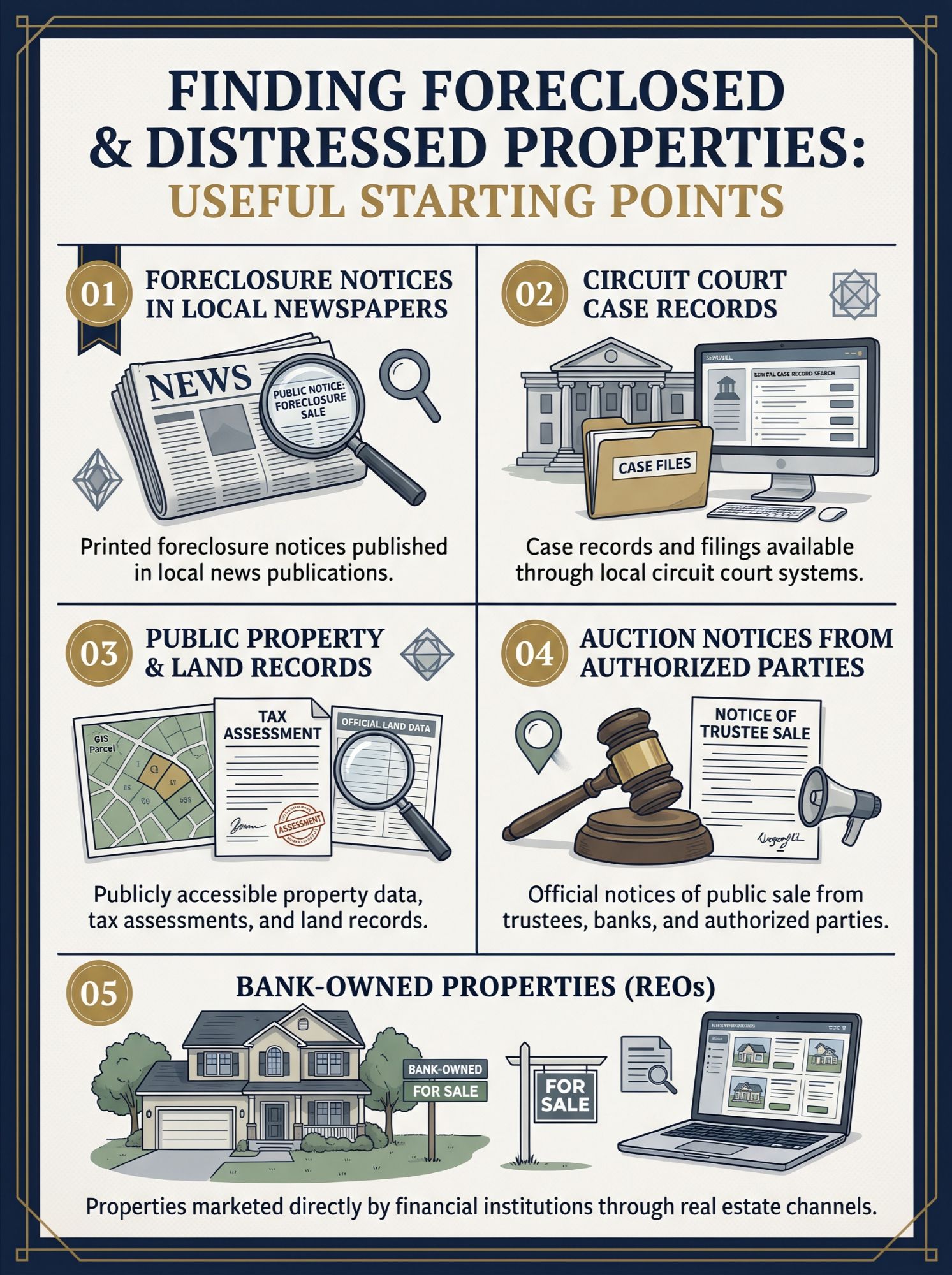
Maryland Courts notes that the court does not maintain a comprehensive list of properties available at foreclosure auction. Legal notices are an important source of auction information.
For buyers who need financing, it's also worth comparing auction opportunities with Southern Maryland homes for sale.
A traditionally listed property may offer more flexibility for inspections, financing, and settlement.
Is an Auction Home the Right Choice for Your Budget?
Buying a house at auction can make sense for some buyers, particularly those who have reliable funding, understand the legal process, and can manage unexpected property expenses.
But if you're trying to buy a home without substantial cash reserves, an auction may not be the easiest route to homeownership.
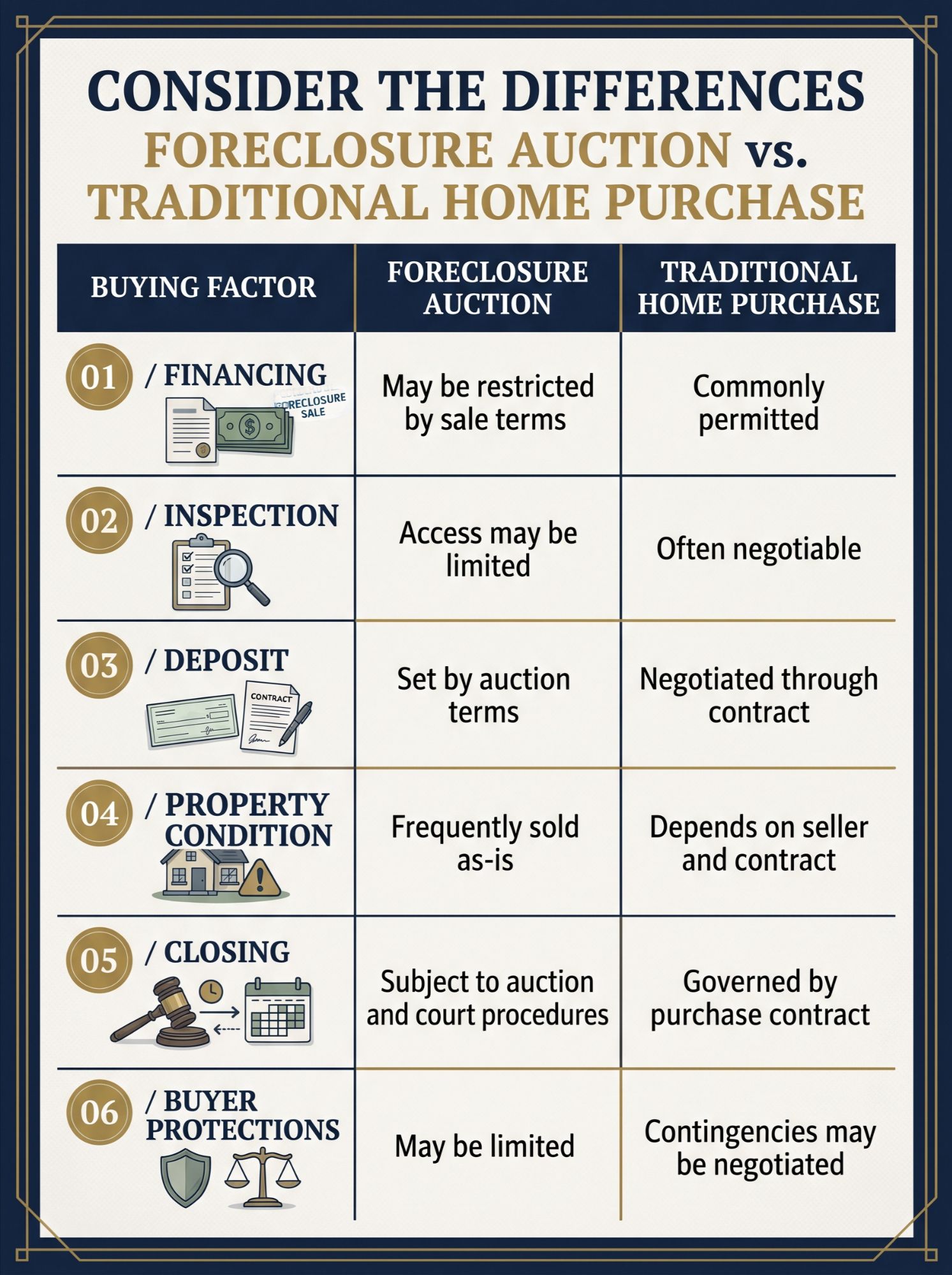
A buyer with limited savings might benefit from investigating conventional, FHA, VA, or other eligible mortgage programs through a qualified lender before pursuing an auction.
These programs have their own qualification rules and expenses, and none should be assumed to provide a completely cost-free purchase.
For buyers comparing their options across St. Mary's, Calvert, and Charles counties, understanding the financing first can help narrow the search to properties that are realistically affordable.
The goal isn't simply to win an auction.
It's to purchase a home you can afford, finance successfully, and maintain after closing.
Frequently Asked Questions
Can I buy a foreclosure at auction with an FHA loan?
Possibly, but it depends on the auction terms, property eligibility, and lender approval. FHA financing typically requires an appraisal and underwriting, which may not fit an auction's settlement requirements. Some bank-owned properties sold through traditional listings may be easier to finance.
How much deposit do I need for a Maryland foreclosure auction?
There is no single deposit amount that applies to every Maryland foreclosure auction. The amount, acceptable payment method, and deadline are established in the specific notice and terms of sale. Review those requirements before bidding.
Can I use a VA loan to buy an auction home?
A VA-backed loan may be possible when the transaction permits financing and the property satisfies applicable VA and lender requirements. VA financing involves an appraisal and property eligibility standards. The VA homebuying guidance explains these requirements.
What happens if my financing falls through after winning an auction?
Depending on the sale terms and legal process, you may lose your deposit or face additional financial consequences. An auction contract may not include a financing contingency. Have an attorney review the terms before bidding.
Can I buy a foreclosure before it goes to auction?
Sometimes. A property owner may be able to sell before a scheduled foreclosure auction, depending on ownership rights, lender requirements, timing, and the legal circumstances. A pre-foreclosure purchase is different from bidding at the foreclosure sale and may allow a more conventional purchase process.
Explore Your Southern Maryland Homebuying Options
Buying a home at auction isn't the only way to find an opportunity in Southern Maryland.
If you're considering foreclosure properties but aren't sure whether your financing will work, The Southside Group Real Estate can help you explore available listings, understand the local homebuying process, and identify questions to discuss with your lender or attorney.
Start by exploring Southern Maryland communities or contact The Southside Group Real Estate to discuss your home search in St. Mary's, Calvert, or Charles County.
The right property is one that fits both your goals and your financial situation.
FROM OUR BLOG

Top Home Selling Mistakes in Southern Maryland and How to Avoid Them
Selling a home is a major financial decision, and even small mistakes can affect your final selling price, timeline, and overall experience. Whether you're preparing to sell your first property or have sold several homes before, understanding common Southern Maryland home selling mistakes can help y

Where to Order Thanksgiving Dinner in Southern Maryland
Thanksgiving is almost here, and if you'd rather spend the holiday enjoying good food and good company than cooking all day, you're not alone. Finding Thanksgiving dinner in Southern Maryland doesn't have to mean preparing everything yourself. Whether you're hosting a gathering in Leonardtown, celeb
Southern Maryland Housing Market Update | November 18, 2026
What is happening in the Southern Maryland real estate market this week? The latest Southern Maryland housing market update shows that buyers are still making moves, homes are going under contract, and price reductions may be creating opportunities for those searching for their next home. Across St.